


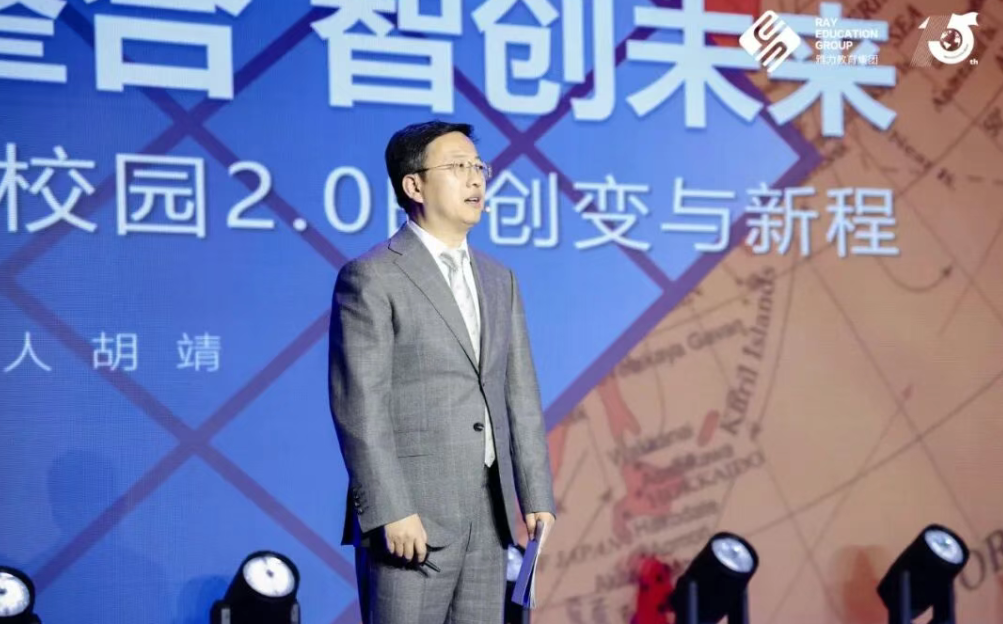
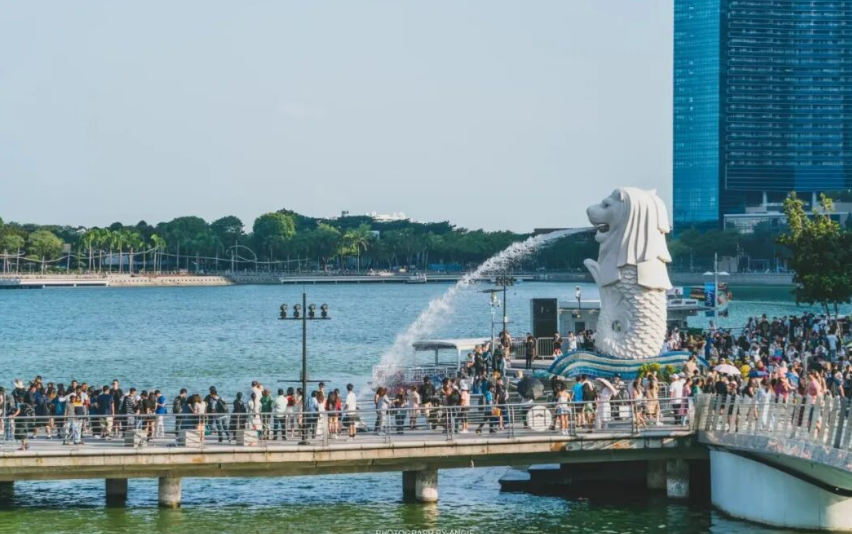
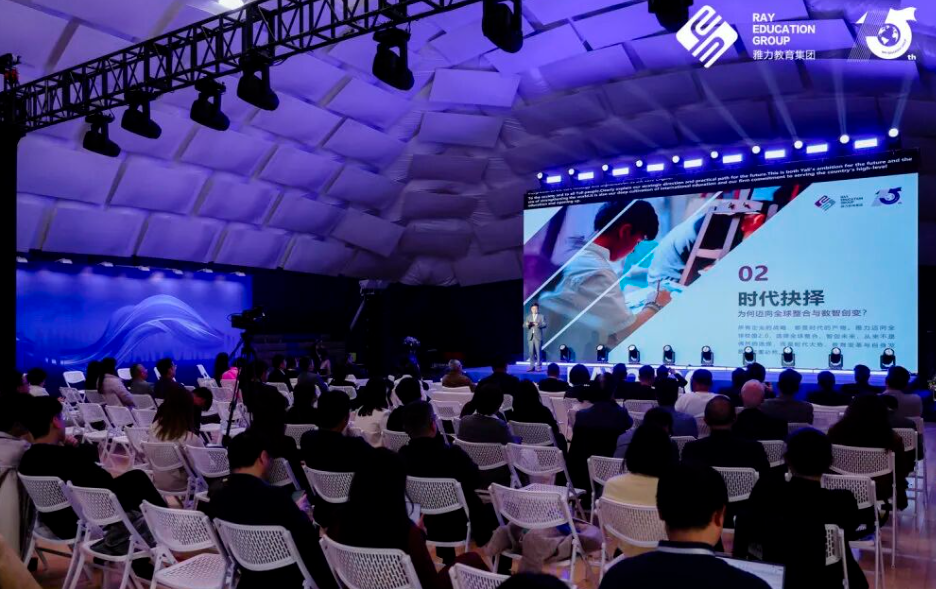
At the 15th anniversary celebration on March 28, the Singapore overseas headquarters was officially launched, along with the Digital Education Center and the Ray Excellence & Creativity Special Fund. At this milestone, Group President Mr. Hu Jing released the Ray "Fourth Five-Year Plan" under the theme "Global Integration, Creating the Future with Wisdom," announcing to everyone: Ray Global Campus 2.0 is here.
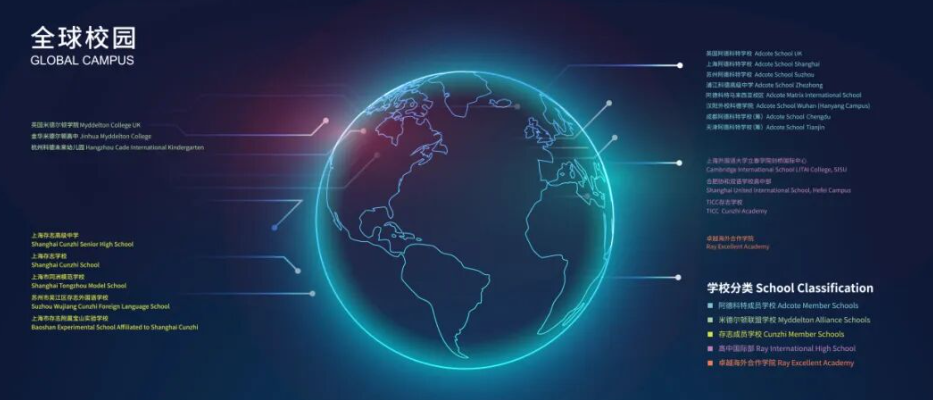
Fifteen years, neither long nor short. From its local roots to now having international schools and high school international departments in the UK, Malaysia, Singapore, and over ten cities in China, Ray has completed its first major step from "bringing in" to "going out." With 99% of graduates entering the world's top 100 universities, 28 schools, and over 30,000 students—this is the answer sheet for Version 1.0, and the prologue for Version 2.0.
But why upgrade? Why now?
01 Education Going Global Is Not an Option, But a Necessity
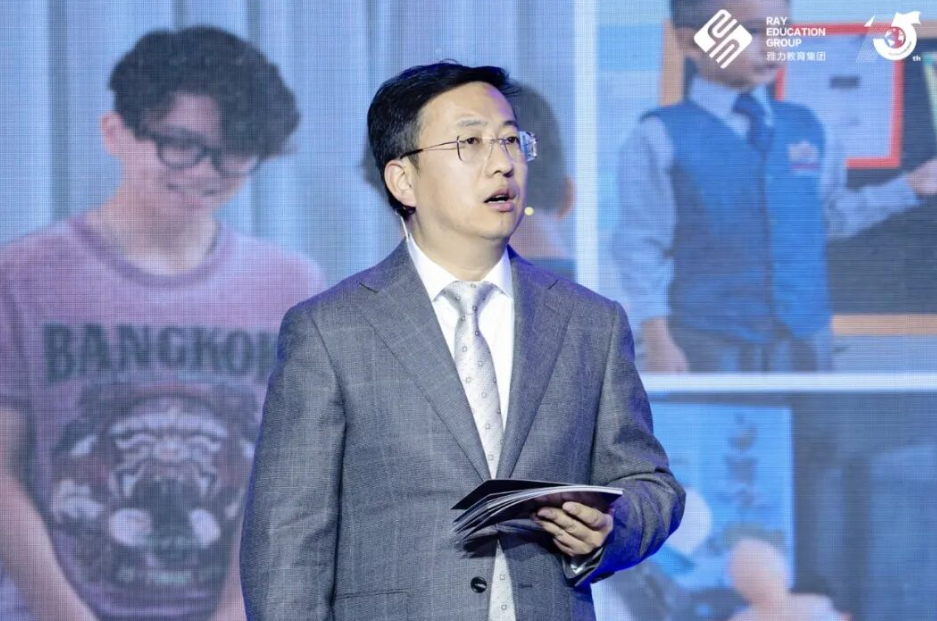
"All corporate strategies are products of their time," Mr. Hu said directly.
The first necessity comes from the broader trends.
Today, China is deepening its high-level opening-up in education and accelerating educational collaboration under the Belt and Road Initiative. Chinese education has moved past the phase of "one-way import" and entered a new stage of "two-way empowerment." As practitioners of private international education, we used to focus on learning and borrowing. Now we have the capability and the need to go global.
"Ray cannot just be satisfied with setting up schools in multiple countries. We need to engage in deeper global operations—bringing Chinese educational ideas out while integrating quality global resources in. "
The second necessity comes from technological change.
AI is reshaping the logic of nearly every industry, and education is no exception. Mr. Hu put it simply: "AI is not just a simple upgrade of teaching tools; it requires the education system to actively adapt to the pace of technological development. " Therefore, digital intelligence capability will become the core foundation for cross-border resource coordination and service upgrades.
The third necessity comes from Ray itself.
Version 1.0 established the physical framework of a multi-country presence, but issues like fragmented operations and disconnected resources meant the full value of a "global campus" wasn't realized. Facing parents' increasingly high expectations for educational quality, Mr. Hu admitted: "Global operations combined with digital-intelligent transformation is the path we must take."
02 What Exactly Is Ray Global Campus 2.0?
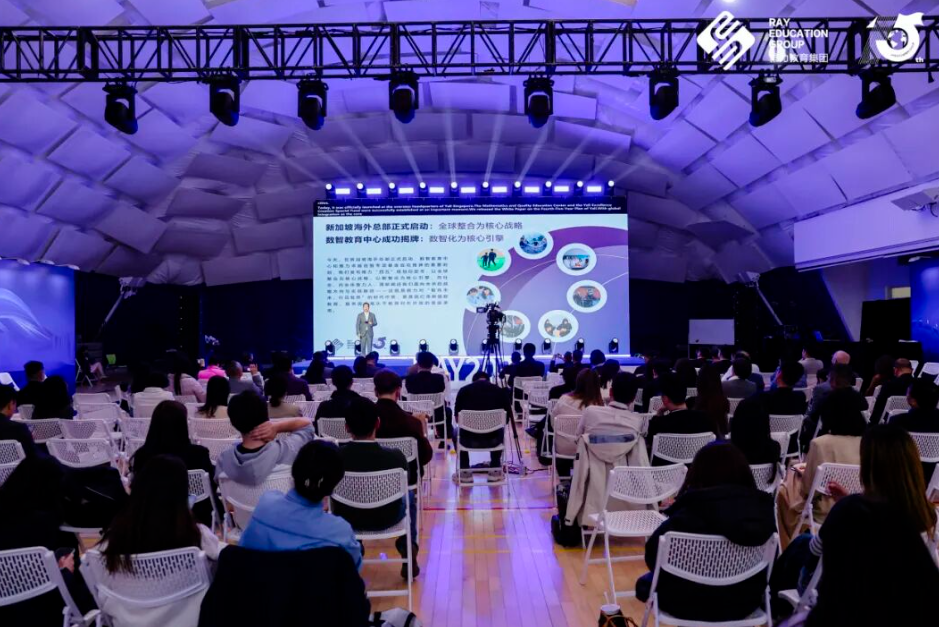
Mr. Hu defined the essence of Ray Global Campus 2.0 in three sentences: Cross-border operations are the skeleton, digital-intelligent innovation is the lifeblood, and the essence of education is the soul.
Building on this, we propose the "Global Campus Two-Way Integration Schooling Model." Its core logic is to use the global campus as a vehicle to achieve two-way flow of quality educational resources —importing cutting-edge international curricula and teaching resources while exporting local Chinese educational standards and philosophies.
Regarding specific implementation, we are building:
①A core structure with Shanghai + Singapore dual headquarters working in synergy.
②Two main tracks: deepening quality domestically and focusing on overseas expansion regionally.
③Two pillars of support: a talent partnership system and digital-intelligent transformation.
④A goal to become a globally leading transnational education group that is locally rooted, globally connected, digitally driven, and operationally excellent.
But no matter how the form evolves, students remain the center. Our original commitment to education stays unchanged, as does our mission to cultivate internationally-minded talent with a national soul.
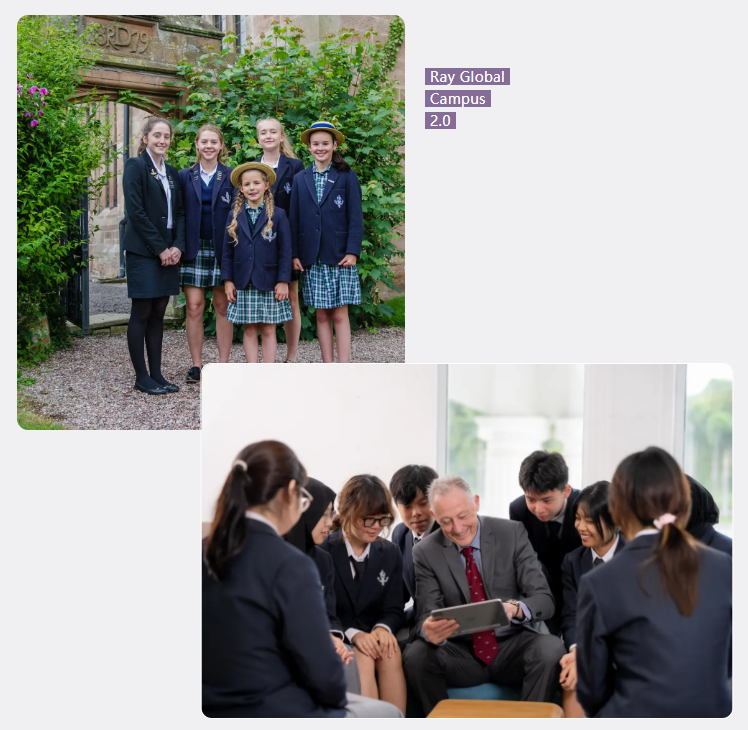
From Version 1.0 to 2.0, Mr. Hu outlined four fundamental leaps:
Management transformation: From "single-headquarters control" to "dual-headquarters synergy." Shanghai sets strategy, strengthens quality, and supplies resources; Singapore manages overseas operations, ensures compliance, and coordinates global expansion—with clear responsibilities and efficient coordination.
Business transformation: From "scattered presence" to "two-way empowerment." Domestically, we focus on quality improvement and exploring new areas; overseas, we deepen presence in key markets and replicate successful models for stable expansion.
Capability transformation: From "campus operation capability" to "transnational comprehensive capability." We are building four core capabilities: compliance management, cross-cultural integration, digital-intelligent control, and global resource integration. Mr. Hu stressed this is the foundation for Ray in the 2.0 era.
Talent upgrade: Innovating the entire chain of attracting, developing, retaining, and deploying core talent in a transnational educational context, leveraging the global campus network to cultivate outstanding global management talent and international teachers.
03 Four Things Ray Will Do in the Next Five Years
Looking ahead to the next five years, Ray's strategic actions are clear and determined.
Build the Dual-Headquarters Foundation, Fill Core Positions, and Release the "Cross-Border Operations Manual"
Ray Education Group is formally establishing Shanghai as the Greater China headquarters and Singapore as the global operations center, and plans to release the "Cross-Border Operations Manual." The former focuses on strategy, quality development, curriculum R&D, and domestic business operations. The latter serves as the center for global talent recruitment and development, Singapore-integrated curriculum R&D, operations and supply chain, and global campus business development and branding.
Achieve Scalable Breakthroughs in Global Markets
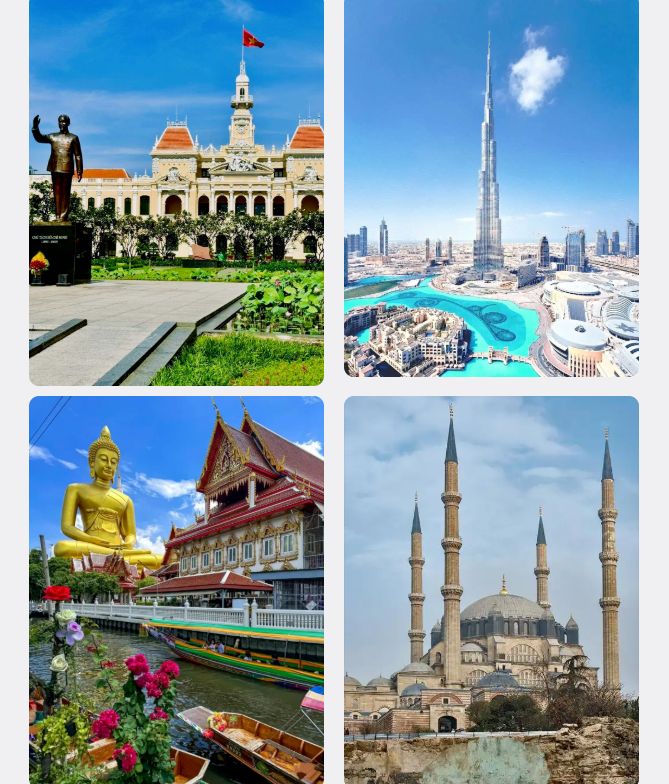
Mr. Hu proposed that the group will continue its "Global Campus Two-Way Integration Schooling Model," implementing an "British brand + local integration" approach for overseas expansion. We will focus on high-growth markets along the Belt and Road: Southeast Asia, the Middle East, and Central Asia, with target countries including Vietnam, Saudi Arabia, Thailand, and Cyprus. The group will add 8-10 K-12 international schools, providing thousands of quality places and achieving significant growth in overseas student numbers.
For overseas campuses, Ray targets mid-to-high net worth families, with local families comprising more than half of enrollment. Schools will offer a K-12 continuous education model, with each campus ideally having 1,200 to 1,500 students. Depending on national education policies, they will offer a dual system of national curriculum alongside Cambridge core curriculum, and also offer IB or A-Level programs.
The business model focuses on brand-light-asset output. Schools will be established by leasing and renovating existing properties, or by acquiring local schools and injecting the Adcote brand and curriculum.
"Every overseas campus should be rooted locally, serve local families, and connect to global resources," Mr. Hu emphasized.
Deepen Domestic Presence, Balancing Quality Improvement with Diversified Expansion
For quality improvement, four key areas are advancing simultaneously: perfecting personalized education services; developing AI-enhanced "smart classroom" teaching models; building elite talent development systems and teaching teams for top universities like Oxbridge and Ivy League schools; and establishing an integrated "management-training-evaluation-research" system.
For diversified expansion, Ray will explore new areas—school management services and pilot programs in silver education (education for the elderly) , exploring lifelong learning.
Drive with Digitalization and Talent, Activating Core Energy for Transnational Operations
For digitalization, the group will build a unified AI teaching support platform to boost organizational efficiency and innovation.
For talent development, we will fully implement the talent partnership system. We will build a global talent pool, focusing on developing three core talent types: management, teaching, and operations. We will simultaneously build four support systems: compliance and risk control, global branding, transnational financial coordination, and corporate culture synergy, to ensure smooth strategy implementation.
Mr. Hu emphasized that Ray's global operations are not about pursuing maximum scale, but about achieving optimal value. We aim to be:
As Adcote Schools take root in more locations worldwide, Ray students will gain real cross-border collaboration opportunities.
In Kuala Lumpur, Shanghai alumni can collaborate with students from the Malaysia campus on Southeast Asian business projects. Engineers trained at the Japan campus might become partners at tech summits in Tokyo. At the NEOM lab in the new Saudi city, Middle Eastern alumni networks can connect with various resources in the energy sector.
Ray Global Campus is not just about helping students "go global." It also witnesses the gradual rooting of Chinese education enterprises overseas—from brand to standard output, from cultural exchange to value co-creation. This is a true reflection of the globalization journey of Chinese companies.

Through fifteen years of dedication, Ray has grown from a flicker to a torch, thanks to every Ray colleague's commitment and shared effort.
In the next five years, we will fully advance Global Campus 2.0 and look forward to seeing real collaboration and achievements among Ray students across five continents.


 021-33161136
 office@rayglobal.org