


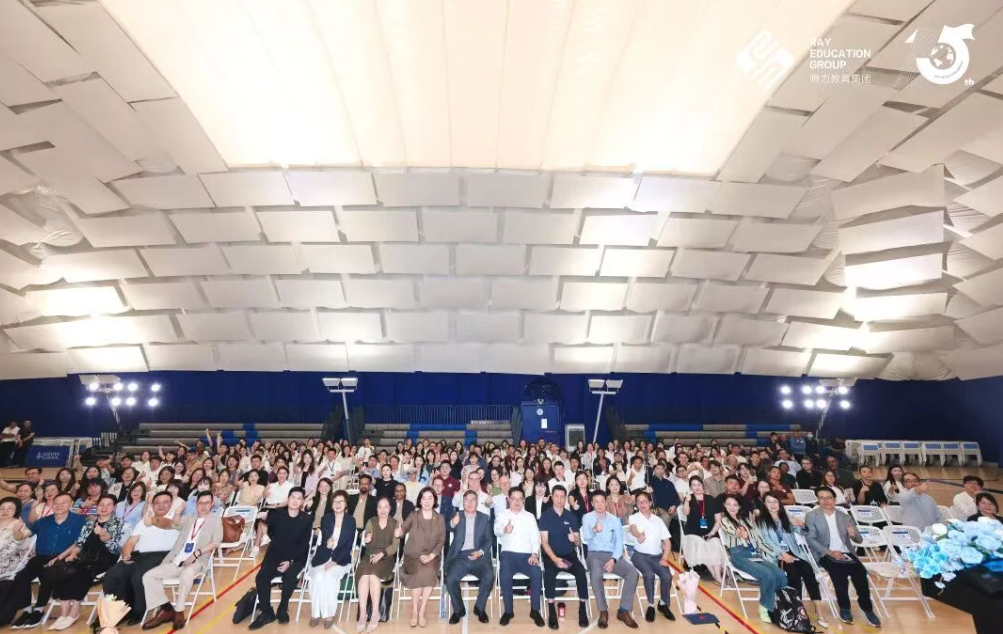
"When teachers grow faster than the times are changing, students truly gain the abilities they need for the future."
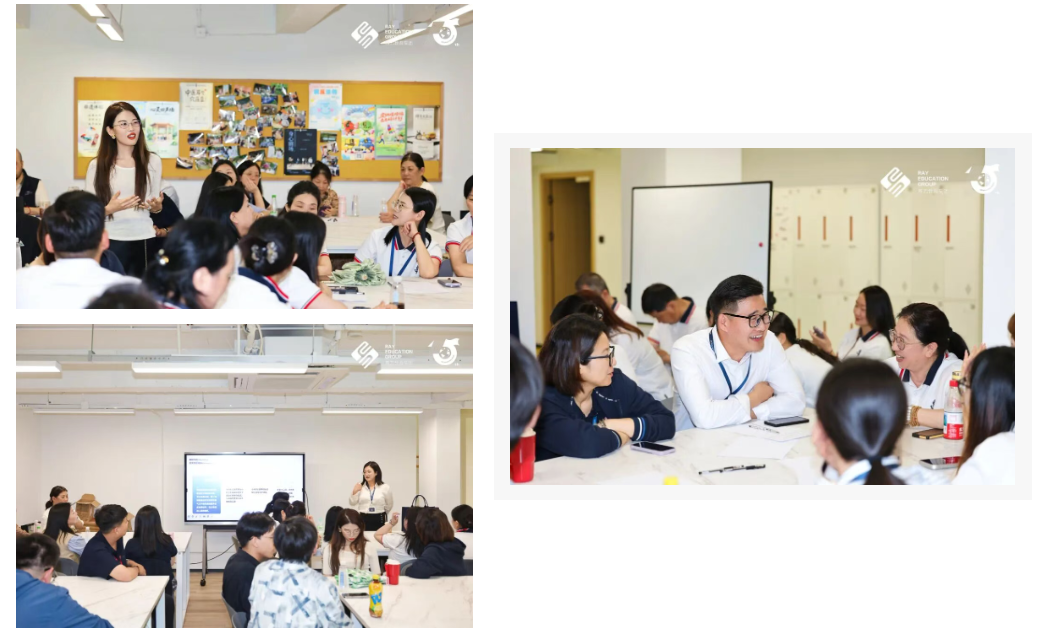
On June 18, the 2026 Ray Future Teacher Development Conference, themed "Future Teachers × Future Education," was successfully held at Adcote School Shanghai. Principals, academic directors, subject heads, homeroom teachers, and key teaching staff from all Ray campuses came together for "1 main forum + 5 parallel breakout sessions" to discuss the professional direction and practical pathways for schools in the future of education.
01 Main Forum: The Full Picture of Educational Transformation
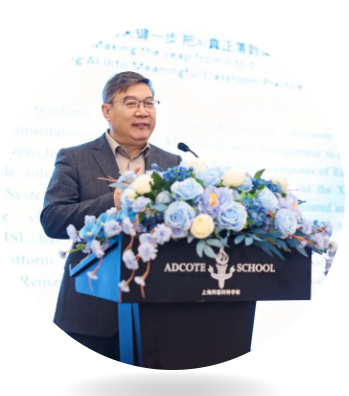
AI Is Not About Following a Trend—It's About Driving "Student-Centered" Learning
Mr. Li Yuan, the Group's Chief Principal, stated frankly that in the face of rapid technological change, the core task for frontline educators is to take that crucial first step from 0 to 1. He mentioned several pioneering examples across our campuses: Aurora Foreign Language School's "Smart Question Classroom," Adcote Zhezhong's "Little Deer Loves Learning" system, SFLS Lytchee Cambridge's AI-assisted lesson plan designs developed with the "Flying Elephant" platform, and TICC Cunzhi's exploration of management efficiency using the "Lobster" system. With these early adopters leading the way, Principal Li also outlined the next direction: using AI to build a lightweight, cross-disciplinary teaching and research platform. Teachers from different subjects and roles would form project teams, start with small reforms, gradually extend these changes to the entire school management process, and ultimately reshape the Group's educational ecosystem.
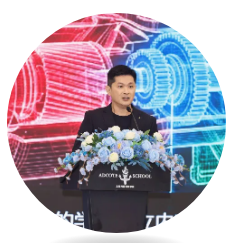
From Passive Compliance to Active Shining: A Blueprint for Evolving School Culture
John Ong, Ray's Global Chief Academic Officer and Chief Principal of Adcote School Malaysia, gave a speech titled "Championing Global Citizenship, Inspiring School Culture, and Empowering Real-World Impact." He introduced the FIAR methodology (from Internal Values to External Impact): rooted in the RISE core values, internalized through character education, put into action through student leadership, and ultimately applied to the real world through the CAS+E framework. This provides a clear vision for what international education should aim to cultivate in students.
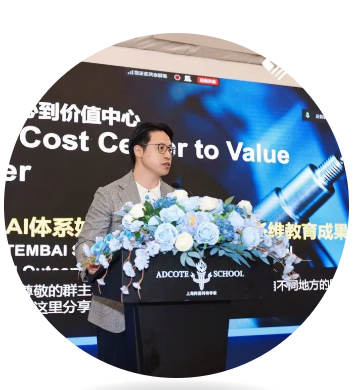
Turning STEM+AI from a Cost into an Asset with Measurable Delivery Standards
Mr. Xie Peng from Adcote School Shanghai's STEM Innovation Center pointed out that in most international schools, STEM+AI courses remain an unquantifiable "cost center." But Shanghai Adcote has an answer from three years of practice: with the STEMBAI system, 72% of the 42 students consistently participating in the program achieved grades of A or above in their CIE official exams—more than double the global average. He proposed the "51121" measurable delivery framework (5 AI tools, 1 AI literacy certificate, 1 AI world identity, 1 personalized intelligent agent, and 2 major interdisciplinary projects), transforming STEM+AI courses from a vague "cost" into a verifiable "value center."
Digital Empowerment, Problem-Oriented Approach: Six Words That Capture the Core of Classroom Transformation
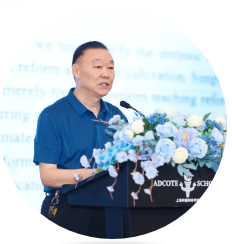
Mr. Ma Jiuke, Ray's Chief Education Expert and Vice Principal for Technology at Aurora Foreign Language Middle School, distilled the "Smart Question Classroom System" into three core elements. The core philosophy is digital empowerment and problem-oriented learning. The teaching model is a closed loop of "self-directed learning – multi-dimensional interaction – precise feedback," driven by problem chains and supported by digital resources. The practical pathway consists of five teaching steps in the "131 Smart Question Classroom": integrating digital resources, pre-class self-study, in-class collaborative inquiry, sharing and presenting outcomes, and teacher-guided evaluation. Among these, "self-study, discussion, and presentation" are the six Chinese characters that capture the heart of classroom activities. This model is currently being piloted at Zhendan Foreign Language Middle School and will be gradually rolled out to other Ray campuses once it matures.
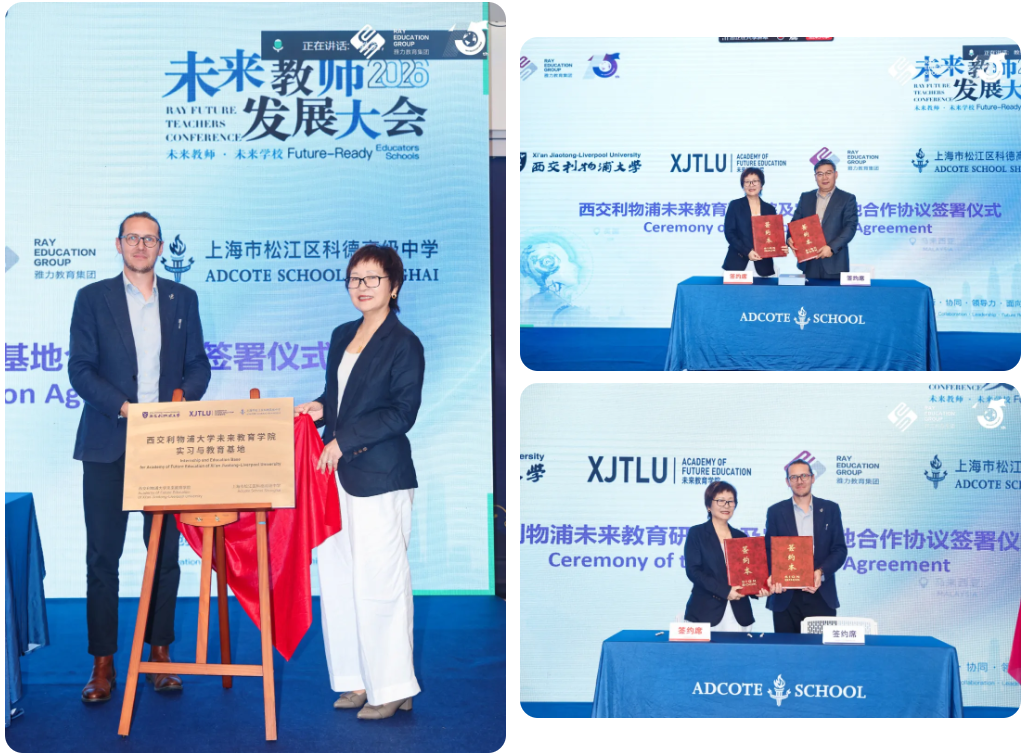
At the main forum, Ray Education Group and its Shanghai Adcote School signed an internship and education base cooperation agreement with Xi'an Jiaotong-Liverpool University's Academy of Future Education. This will provide Ray teachers with more systematic academic support and professional development pathways, marking a new step forward in building Ray's teacher development system.
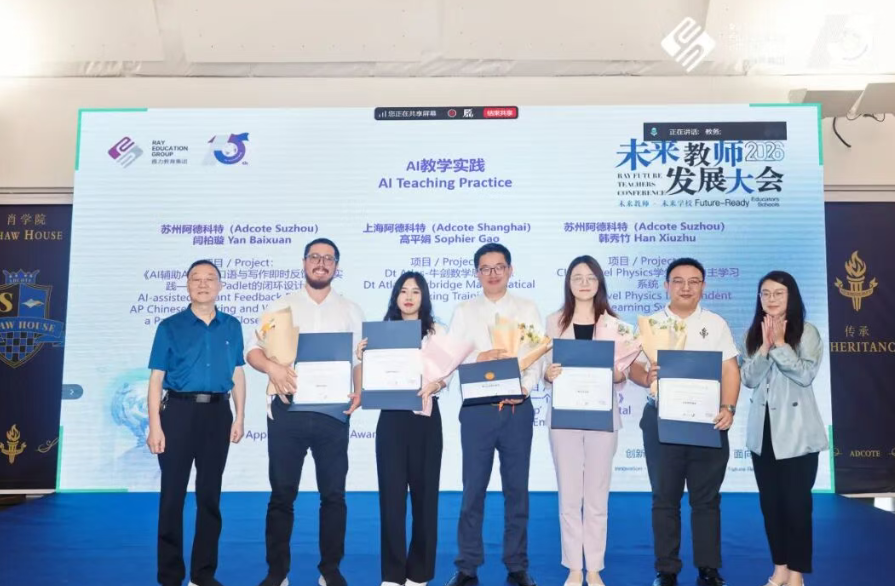
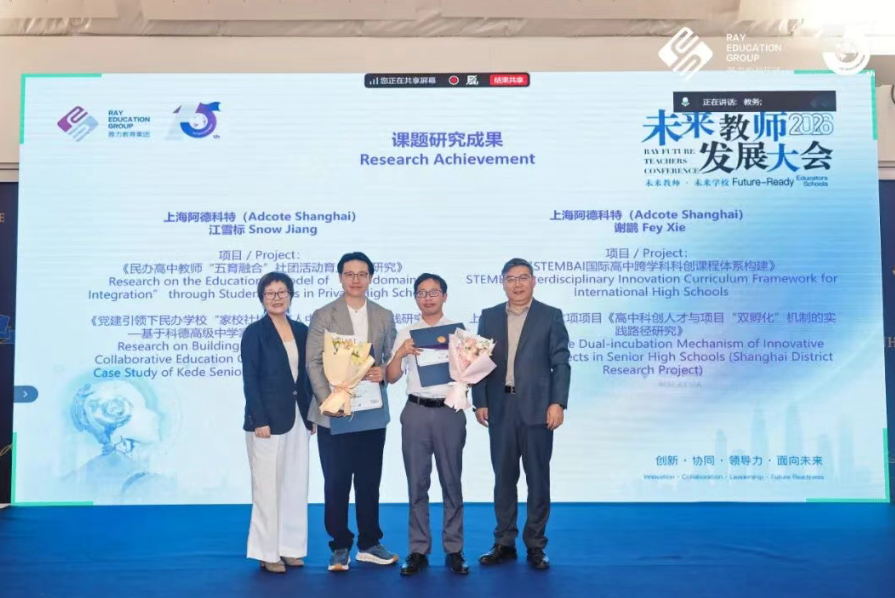
The conference also recognized teachers who had made outstanding achievements over the past year in areas such as research projects and AI teaching practice.
02 Breakout Session①: STEM Education Innovation
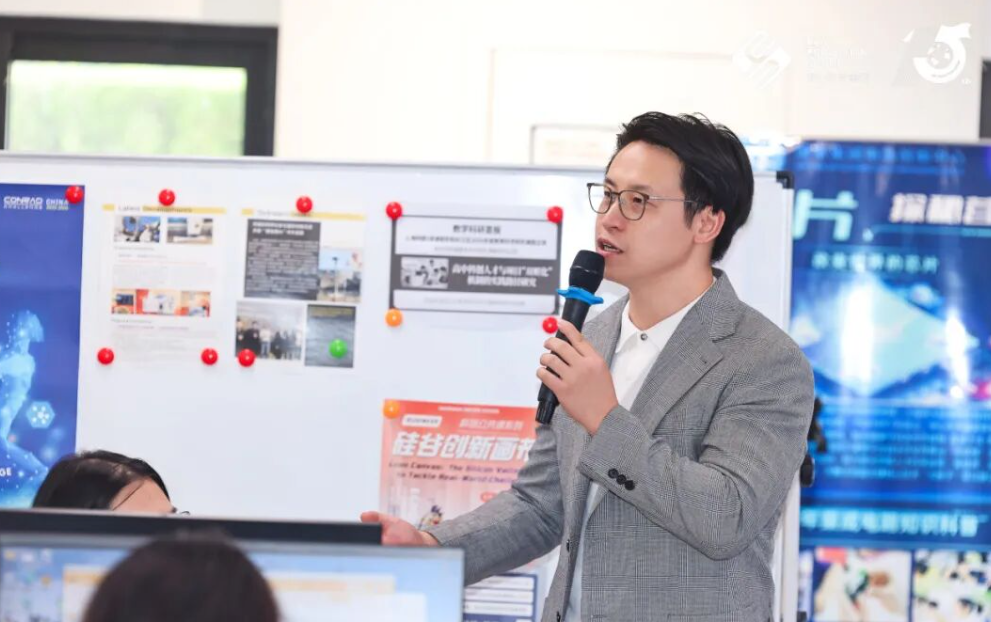
Mr. Xie Peng from Adcote School Shanghai's STEM Innovation Center kicked things off by laying out five real pain points: difficulty in scaling up, shortage of qualified teachers, projects hard to sustain, resources hard to secure, and students using AI to cut corners. These points struck a chord with everyone in the room, and the discussion immediately got down to practical matters.
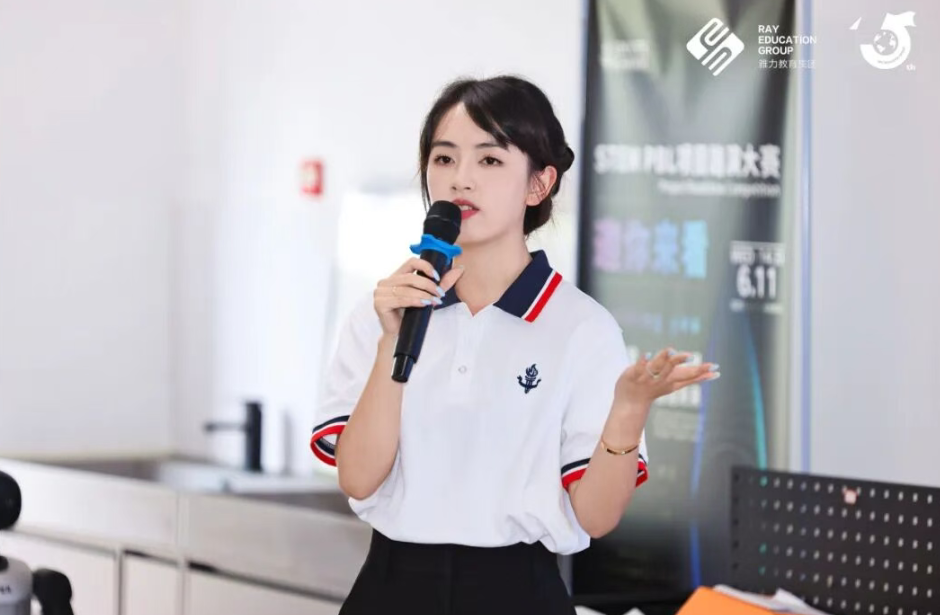
Ms. Xiong Shengnan, an Economics and Business Studies teacher at Adcote School Shanghai, shared her experience coaching students for the Conrad Challenge. Starting with a prototype for a smart guiding cane, her team dug into real user needs through interviews and market research, eventually making it to the national finals. She mentioned two memorable moments: one student asked, "Can blind people eat sunflower seeds?"—a simple question, but it showed they were starting to think from others' perspectives. Another time, the team was picking background music while rushing to meet a deadline. She shared both the chaos and the growth that come with real project work.
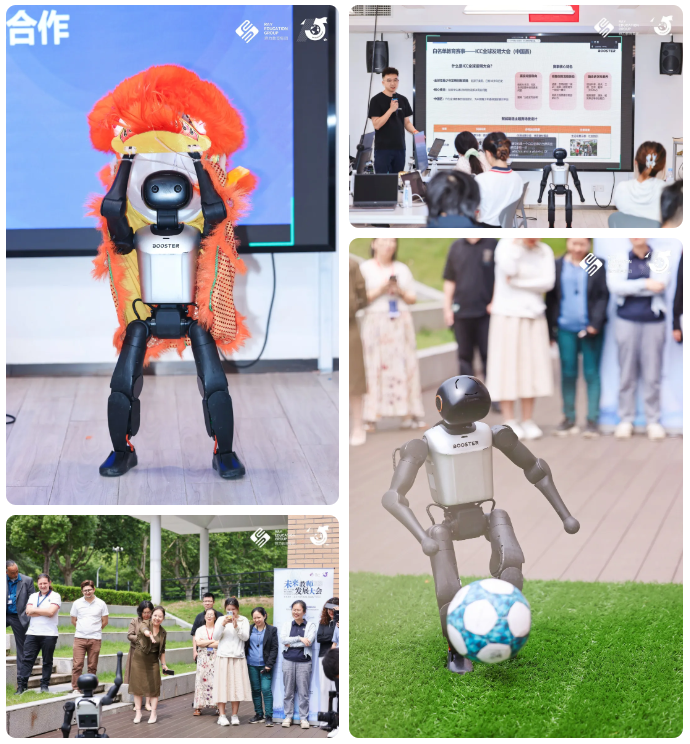 The Booster robotics team from Acceler Evolution brought a live demo from their world champion humanoid robot. The robots performed a lion dance, played soccer, and even shook hands with attending teachers. It was both technically impressive and visually engaging, and it gave everyone a tangible sense of how embodied AI courses could find their way into international schools.
After that came a hands-on session on visual recognition curriculum design. Teachers split into groups to design "AI visual recognition × subject" classroom activities, using low-cost solutions to complete a full teaching cycle.
03 Breakout Session②: AI-Empowered Education
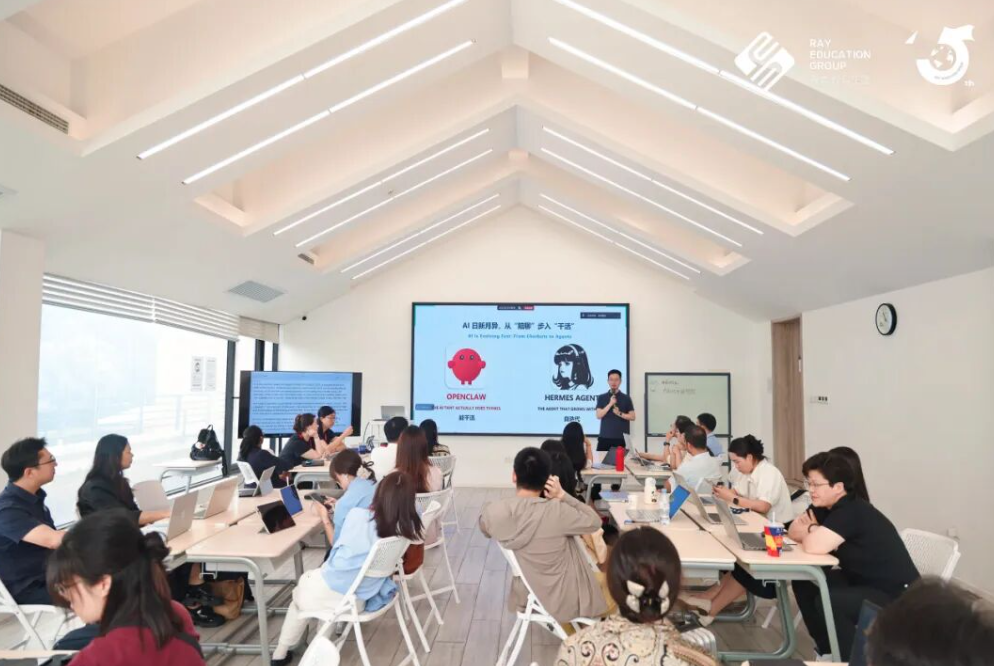
Breakout Session 2 traced a clear line of logic: how is AI actually being used in education? Mr. Li Jie, co-founder of Xiaobao Online, pointed out that in the past, informatization solved management efficiency, but today AI is starting to get involved in teaching quality itself. From managing people and tasks to managing teaching and learning, he showed real-world applications like test question generation, essay grading, oral assessment, and learning diagnosis.
Mr. Xu Wei, CIO of Shiwai Education Group, noted that AI now offers a possible solution to the long-standing tension between scale and personalization. He presented his "Three-Knowledge Analysis" framework and a case study from Jinshan Shiwai School, showing that two students with the same score may have completely different underlying issues. AI can see beyond the grade to what's happening in the learner's mind—and that's the starting point for "quality teaching + AI empowerment."
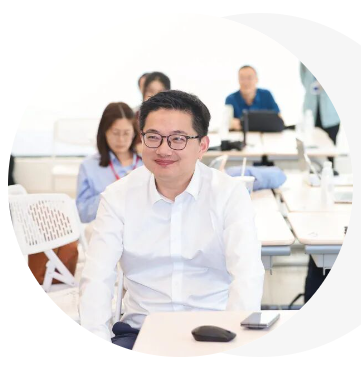
Principal Qian Changsheng from TICC Cunzhi shared how their AI interview assessment system solves three practical problems: heavy workload, inconsistent scoring, and incomplete evaluation dimensions. Whisper handles transcription, AI scores candidates against four criteria, and teachers review the reports to make final judgments. For example, one student scored only 13 in English but 19 in attitude. The AI caught and included in the report that "the student is academically weak but has a great attitude." This multi-dimensional assessment brings to light the strengths that grades alone can't show.⬆️
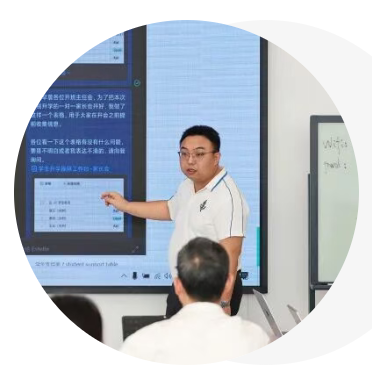
浦江科德融合部刘星校长发现:学校每天都在产生大量信息(学生谈话、家校沟通、学科观察),但留不住、找不到、继承不了。他没有搭建大平台,而是用GetNotes做转录、OpenClaw做信息分流、飞书Bot做触达提醒。搜索可定位、待办自动提醒、历史记录可继承。
Principal Liu Xing from the International Department at Adcote School Zhezhong noticed that schools generate a huge amount of information every day—student conversations, parent-teacher communications, classroom observations—but it's often not stored, not searchable, and not transferable. Instead of building a big platform, he went with a lightweight setup: GetNotes for transcription, OpenClaw for routing information, and Feishu bots for reminders and alerts. Now, information is searchable, to-dos pop up automatically, and historical records can be passed on. At the same time, he drew a clear line: AI makes no final judgments—every output must be reviewed and confirmed by a teacher.⬆️

Deputy Head of Mathematics at Adcote School Shanghai, found that students' Oxbridge interview struggles weren't about knowledge gaps but about getting stuck when pressed with follow-up questions. Since no off-the-shelf AI tool could address this, she built her own agent. Dr. Atlas works by asking layer after layer of questions, without judging right or wrong. The feedback was telling—students said, "Only when pushed did I realize I hadn't thought it through," and "It feels like a real interview, but I'm not afraid of giving a wrong answer."⬆️
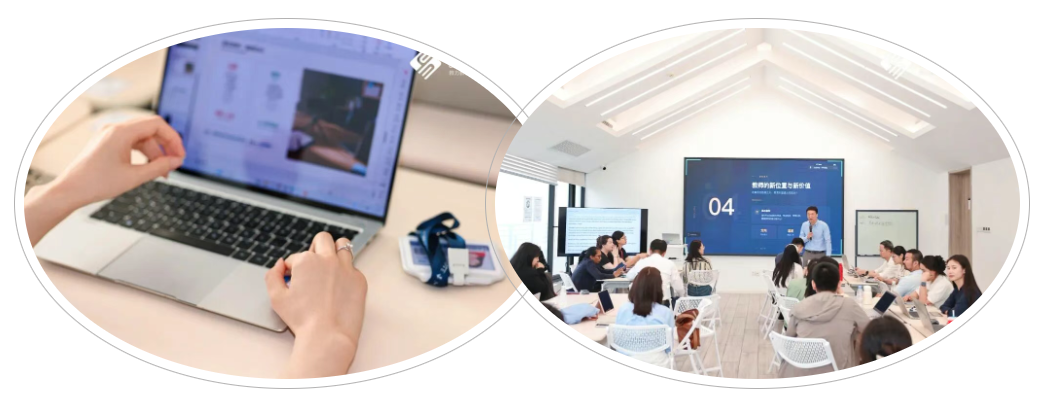
Mr. Xiong Hui, Vice Principal of SISU·Litai College, led the participating teachers in group hands-on activities, trying out tasks like AI-generated questions and grading, automated scoring for English oral exams, AI mock interviewers, student report card comment generation, and creating personalized teaching materials.
04 分论坛三:Breakout Session③: Language Learning
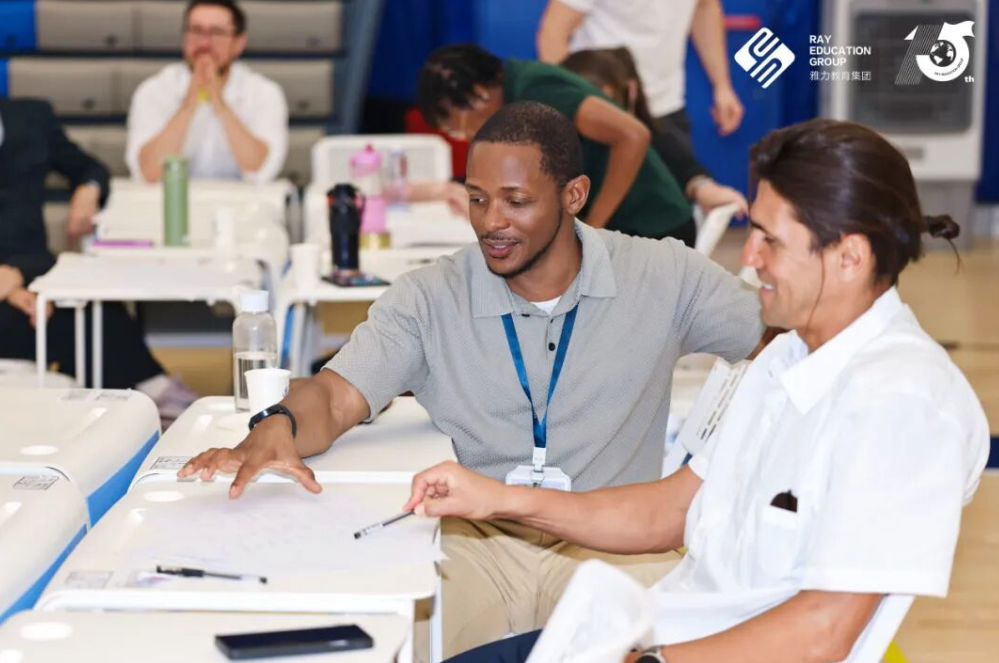
Breakout Session 3 kicked off with three opening statements—"Students who can't explain it haven't understood it," "Peer feedback is essential to learning," and "Motivation must come before learning."
Simon McRoberts, Vice Principal of Adcote School Shanghai, introduced the CLIL framework—Content and Language Integrated Learning. Its core logic is simple: students learn subject content through a foreign language, with content and language progressing together, not in sequence. He broke down the "4Cs" framework—Content, Communication, Cognition, and Culture—along with the "Language Triptych" tool, which covers vocabulary, sentence structures, and discourse patterns, helping teachers systematically plan the language support students need in any given lesson.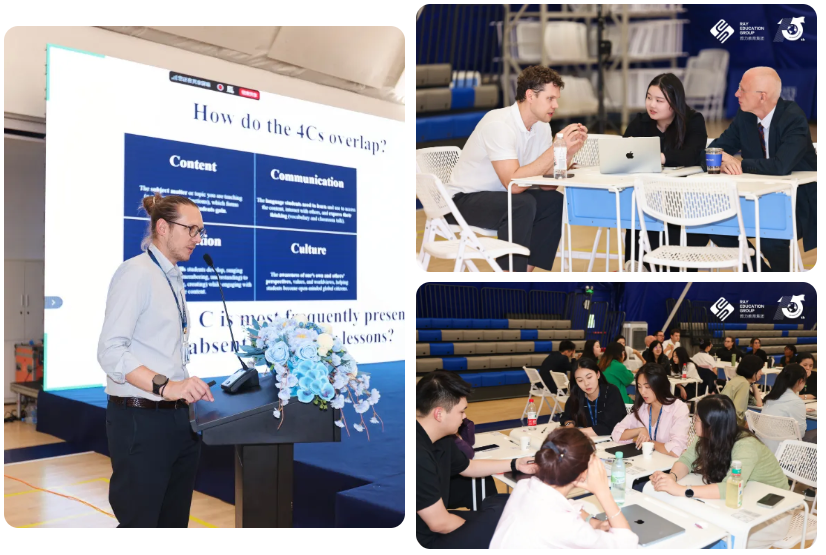
Ms. Wu Siying, an English teacher at Adcote School Suzhou, shared how to design rubrics and used her IELTS class as an example to show how they can assess classroom outcomes. She outlined two design approaches:
The top-down approach—start with the goal and break it down into criteria, which works well for classes with clear objectives.
The bottom-up approach—start from actual student work samples and identify evaluation dimensions from there, which is better suited for exploratory projects.
 She then led the participating teachers in group exercises, applying the methods to their own subject contexts. The core logic of both approaches is the same: the clearer the criteria, the better students understand what "good" looks like.
05 Breakout Session④: Student Development and Activities
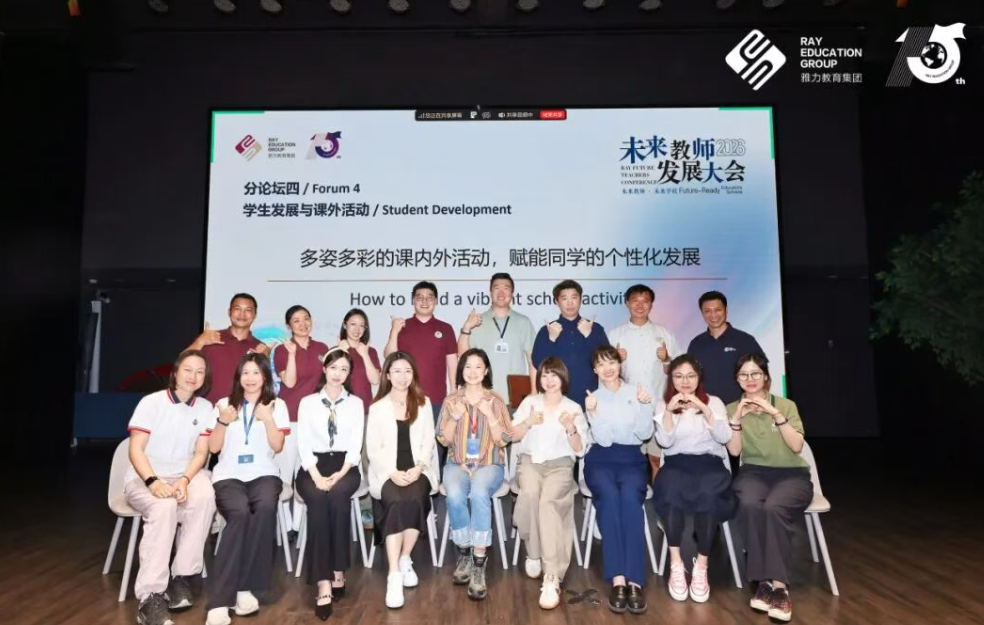
Extracurricular activities are not a side note to teaching—they are an essential part of student growth.
Mr. Chen Fei, Deputy Director of Student Affairs at Guanghua Cambridge, shared online how sports uniquely help build students' resilience, teamwork, and sense of rules, starting from the school's broader educational goals. He talked about what his campus has been doing, and also spoke honestly about the real challenges they face.
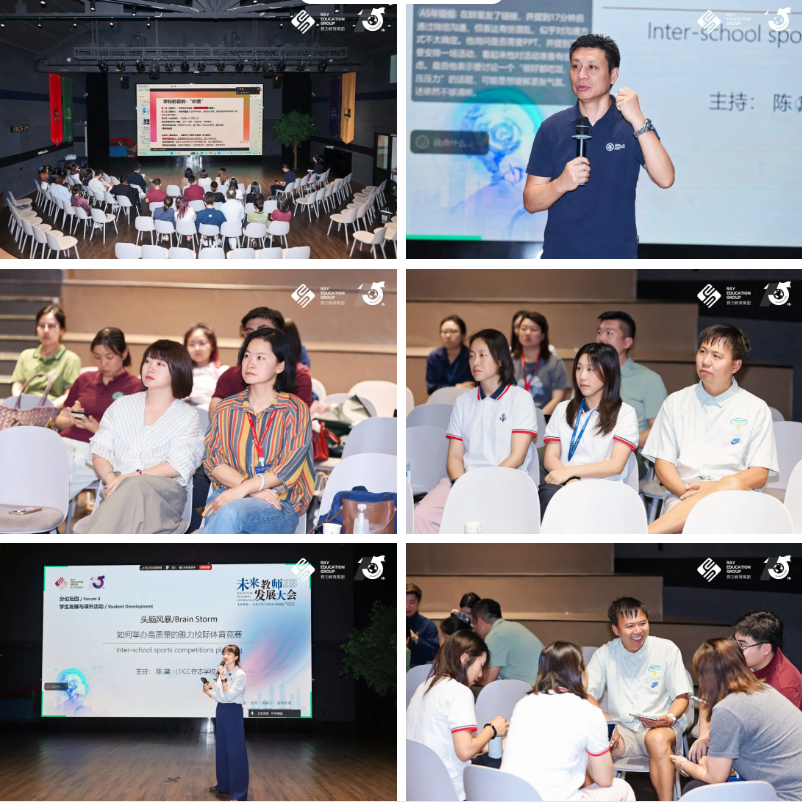
The afternoon workshop started with three questions: What have we done? What value did it bring? What else can we do next? Teachers from different campuses shared examples like basketball leagues and fun sports days, and also pointed out the difficulties they faced with each activity. The discussion moved from "What's the problem?" to "How do we solve it?"—with real progress at every step.
The final group co-creation session focused on a specific question: how to run high-quality Ray inter-school sports competitions? The participating teachers worked out initial plans covering event types, timing, venues, teams, budget, format, and support. Gradually, a cross-school league started to take shape.
06 Breakout Session⑤: Boarding Life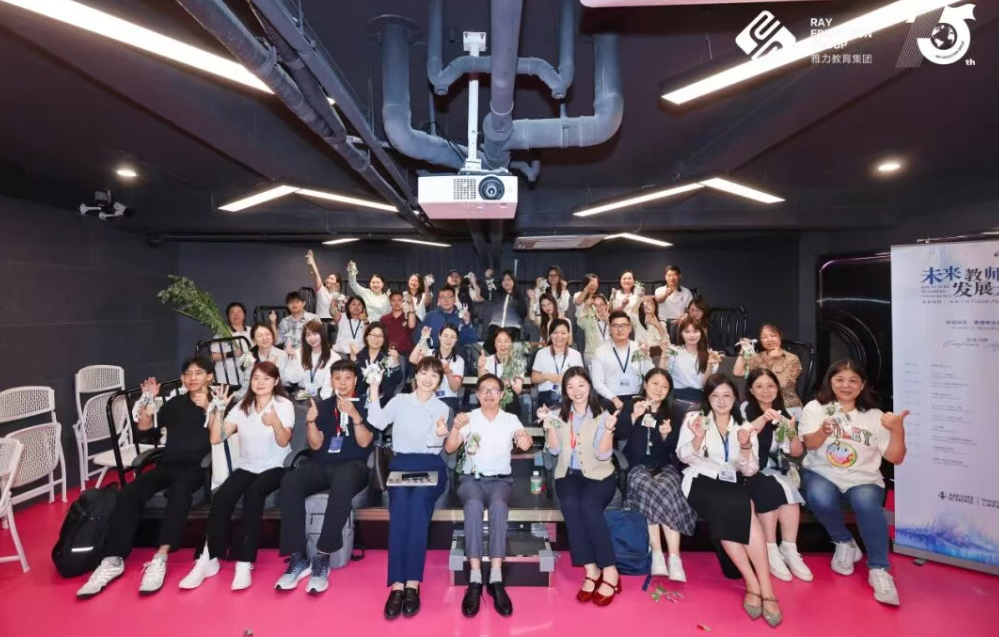
Boarding is not just about "having a place to stay"—it's the part of the student support system closest to their daily lives.
Adcote School Shanghai shared its "Personal Academy" approach: embedding small-group academic and sports support into weekend boarding programs, turning passive free time into active growth opportunities.
SISU·Litai College presented its dormitory management system and hygiene scoring mechanism, using clear quantitative standards and closed-loop management to ensure consistent execution.
Adcote School Suzhou introduced its integrated "all-hands-on-deck" approach, covering everything from phone management to daily housekeeping check-ins, and syncing information between the dormitory and academic teams—ensuring clear standards and trackable processes.
Adcote Wuhan(Hanyang Campus)shared its boarding character education system, which includes standardized housekeeping, routine inspections with feedback loops, a multi-tiered reward and discipline system, an emergency response network, and student voice forums. This approach has shifted students from a passive "I have to do this" mindset to a more proactive one, with excellent housekeeping rates rising above 95%.
In the hands-on session, participating teachers split into groups to complete four tasks:
5-minute bed-making and desk organizing
A timed room search for hidden contraband
Handling sudden situations like a student's late-night emotional breakdown
A live role-play communication exercise with a "high-needs parent"
The competition itself wasn't the goal—it was about helping teachers calibrate standards and exchange experiences through hands-on practice.
During the conference, we randomly interviewed several attending teachers. Here are their thoughts on the spot:
Xu Fei, General Manager of Ray Education Group: I've visited many STEM programs in the industry, but today I realized that what we've built at our own schools truly meets students' needs. This program runs continuously from lower to upper grades and also connects to tangible university admission outcomes. I believe the best innovation programs are the ones incubated right on campus.
Wang Wen, Deputy Dean of Xi'an Jiaotong-Liverpool University's Academy of Future Education: This conference aligns perfectly with XJTLU's philosophy, since we're also focused on future-oriented education. The launch of the STEM HUB shows that the Group has elevated AI and interdisciplinary teaching to a strategic level, pushing students beyond the traditional classroom. We recognize that in the AI era, change must start with teachers, then reshape the education ecosystem, and ultimately benefit students. Looking ahead, we look forward to welcoming Ray teachers to the XJTLU campus—not just to experience a different international campus, but also our specialized labs and facilities.
Dr.Johannes, Academic Principal of SISU·Litai College:This conference is I would say the best I have seen so far. It is very appropriate for an international school and an international organization. That's the first time I see so much innovation planned and discussed and projected for the near future, for the school and for our organization. I've reviewed a number of organizations that are very high quality, with a lot of focus on continuous learning and improvement innovation, but I would say what I have seen today about the innovation in organization that beats them all.
Xie Peng, Physics Teacher at Adcote School Shanghai: It was a great honor to exchange ideas with teachers from different Ray campuses and even overseas schools. We shared our experiences in the morning, and it was truly meaningful to see how each school has its own unique approach to implementing the STEMBAI curriculum—there's so much we can learn from one another.
Xiong Shengnan, Economics and Business Studies Teacher at Adcote School Shanghai: With the support of the STEMBAI system, the key to helping students move from subject knowledge to innovative application is guiding them to observe real life. For example, when they wanted to build a smart guiding cane, my first step was to encourage them to participate in vision-impaired support activities, interview people with visual impairments, and identify their specific daily challenges. Then we integrated the subject knowledge into the product framework.
Andrew, Psychologic Teacher of Adcote School Suzhou:The conference was very lovely. A lot of the content what not that Simon covered was very theoretical, but then he had us do the actual content itself. It was a very effective way to understand the teachings that he was looking at and the message he was trying to get across.
Zhang Yumo, Chinese Teacher at TICC Cunzhi Academy: I could feel everyone's strong interest in AI, especially how to put it into actual teaching practice. Many teachers shared their insights and practical approaches, and I picked up some new ideas myself. Still, I'm thinking about how we can provide more concrete case studies to give teachers clearer references for implementation.
From the vision-setting of the main forum to the hands-on collaboration across five breakout sessions, every part of the conference had its own focus while connecting meaningfully with the others—ensuring every teacher present truly "took something away and left with a clear direction."
Ray Education Group is not just building a one-time platform for exchange, but is committed to providing ongoing support for teacher growth. Cross-campus collaboration, interdisciplinary integration, and systematic development—this is our commitment to the "future teacher," and the core path for our next phase of teacher development.


 021-33161136
 office@rayglobal.org